
What Is A Habit Tracker? How Does It Work?
A simple yet effective way to monitor your daily routines is through a habit tracker. One approach is to utilize a calendar, marking each day you successfully stick to the routine with a cross or other symbol. For instance, if meditation is your goal, give yourself an X on every day you complete this task. As time passes, this visual record of your progress becomes known as a habit streak.
The concept of ‘what gets measured gets managed’ rings true, especially when it comes to habits. Peter Drucker, the pioneer of modern management, once said, ‘What gets measured gets managed.’ This principle highlights the importance of tracking and measuring one’s habits in order to effectively manage them. While it may seem daunting at first, habit trackers can provide a helpful solution.
Top Benefits Of Using A Habit Tracker
Using a habit tracker can have a profound impact on your mindset and behavior. By shifting your focus from the end result to the process, you’ll become more invested in making progress rather than fixating on a specific outcome. This approach has been shown to increase motivation and productivity, as you’re able to celebrate small victories along the way. With a habit tracker, you’re not just working towards a goal – you’re creating a visual representation of your progress, which can be incredibly motivating. Each completed streak serves as a reminder that you’re moving in the right direction, and the sense of accomplishment that comes with recording your success can be incredibly fulfilling.
What All Can You Track In A Habit Tracker?
A habit tracker can accommodate a diverse range of habits and behaviors, encompassing various aspects of life. Some examples include daily routines such as establishing a wake-up time, morning routine, and consistent bedtime schedule. Additionally, it’s possible to track physical health by monitoring exercise, nutrition, hydration, and sleep patterns.In the realm of mental well-being, individuals can record mindfulness practices, therapy sessions, and self-care activities. Productivity enthusiasts can utilize the tracker to monitor tasks, projects, and goals, as well as the time spent on each activity. Financial tracking involves monitoring expenses, creating a budget, and setting aside money for savings or investments.Moreover, learning and personal growth can be tracked by monitoring progress in mastering new skills or subjects, such as a language, musical instrument, or academic subject. The tracker can also accommodate relationship goals, including the time spent with loved ones, interaction quality, and building stronger connections. Finally, it allows individuals to monitor personal growth, develop new habits, and break old patterns.
15 Types Of Habit Trackers
Bullet journaling provides a range of habit tracking options, catering to diverse needs and preferences. While daily habit trackers offer simplicity, more advanced level 10 life trackers provide a comprehensive framework for monitoring habits. The ideal choice depends on an individual’s goals, habits, and personal inclinations. Here are the various types of habit trackers to consider:
Monthly Habit Trackers

A monthly habit tracker is a valuable tool for monitoring and organizing daily actions over a 30-day period. Unlike weekly trackers, this format offers a comprehensive view of progress, providing a sense of accomplishment as habits unfold. While initial setup may require more time, the payoff lies in the ability to visualize success. However, the drawback is that making changes to one’s habits can be challenging, requiring a full month’s commitment before updating the tracker. Nevertheless, monthly habit trackers offer a versatile platform for tracking various aspects of life, including expenses, spending and savings, fitness and exercise, sleep patterns, mood swings, water intake, medication regimens, reading habits, cleaning schedules, skincare routines, and more.
Weekly Habit Trackers

Weekly habit tracking has become a staple for many individuals seeking to monitor their progress and make adjustments accordingly. By committing to a shorter timeframe, such as a week, it’s easier to establish a consistent routine. This layout allows you to analyze your accomplishments and refine your approach moving forward. One of the benefits of this type of tracker is that it provides a clear focus on short-term goals, enabling you to tackle smaller objectives with greater ease.
While weekly trackers do offer a sense of accomplishment and clarity, they can also present challenges when it comes to reviewing and consolidating progress over time. Since each week’s layout is separate, it may be necessary to dedicate additional effort to organizing information from multiple spreads. Nonetheless, the benefits of this type of tracking often outweigh any minor drawbacks.
In addition to monitoring habits, weekly trackers can be used to plan out meals, workouts, outfits, homework, meditation routines, homeschooling schedules, and even skills like learning an instrument or kid-friendly activities.
Yearly Habit Tracker
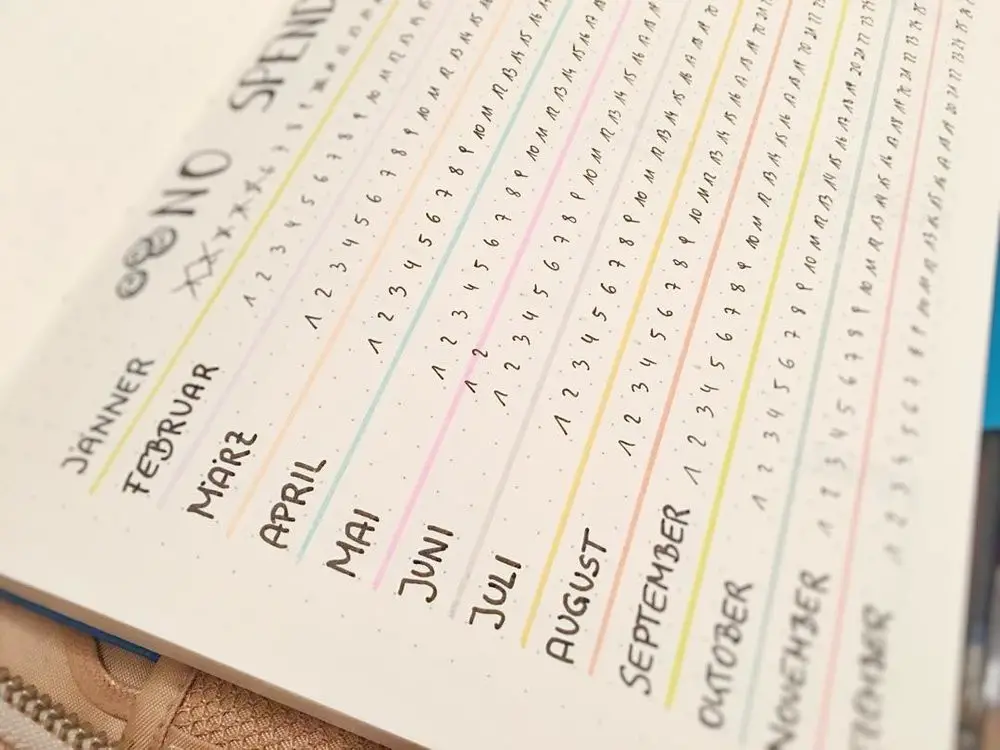
A yearly bullet journal tracker is an invaluable tool for individuals seeking to establish lasting habits, achieve long-term goals, and maintain consistency over the course of a year. This type of tracker allows users to monitor their progress and stay focused on what they want to accomplish. Typically, only one habit can be tracked per page in a bullet journal, making it an efficient way to keep tabs on your yearly objectives.
Circular Habit Trackers
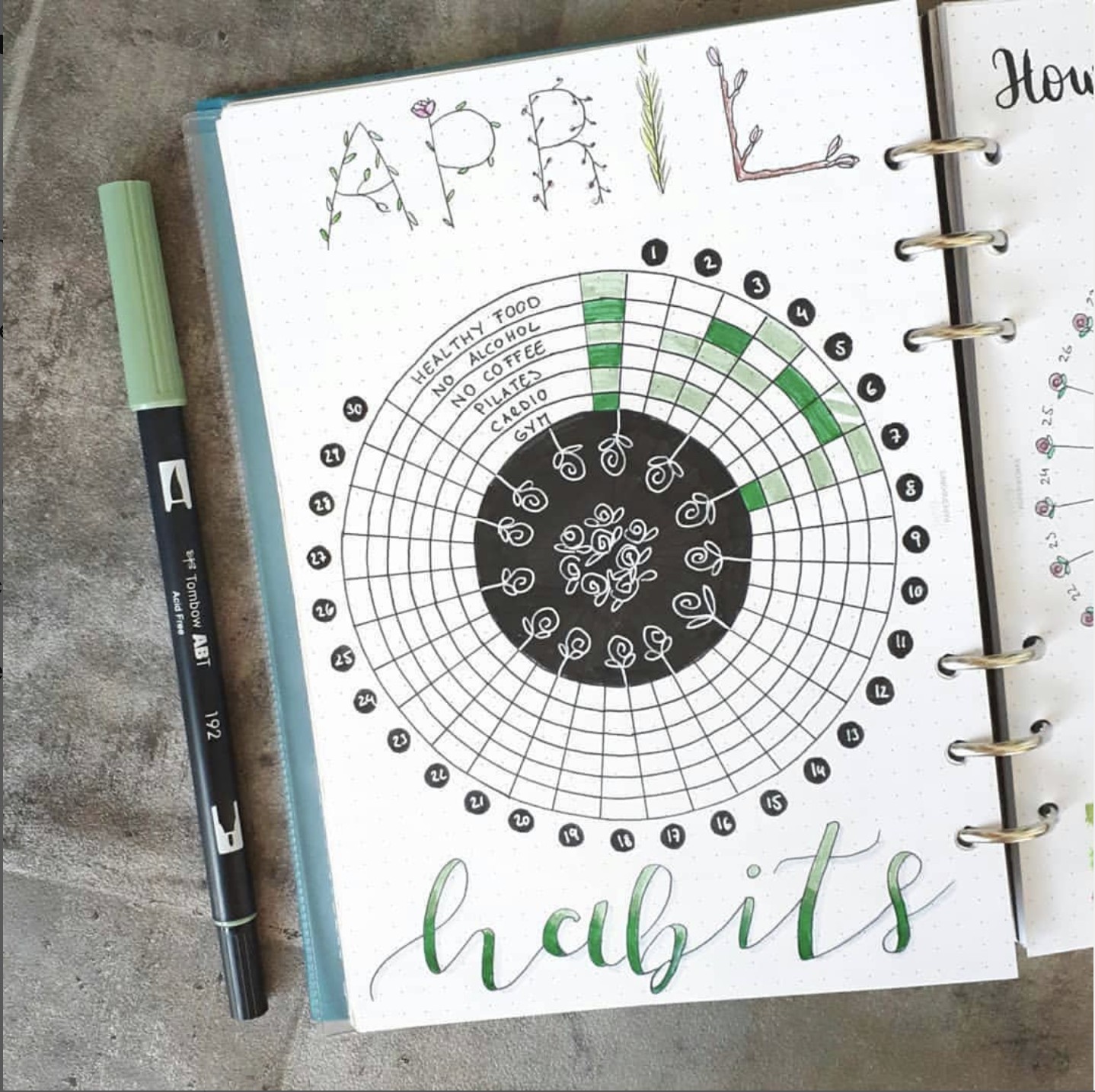
In the world of bullet journaling, there’s an innovative approach to tracking habits – the circular habit tracker. Unlike traditional rectangular or grid-style trackers, this design uses a circular layout divided into distinct sections. Each habit is assigned its own section within the circle and given a unique visual identifier, such as a color, symbol, or pattern.
To mark progress, users simply fill in or color in the corresponding section of the circle for each day’s completed habits. This visually striking approach not only makes tracking more engaging but also provides an instant sense of accomplishment when seeing the filled-in sections build up.
Mini Habit Trackers
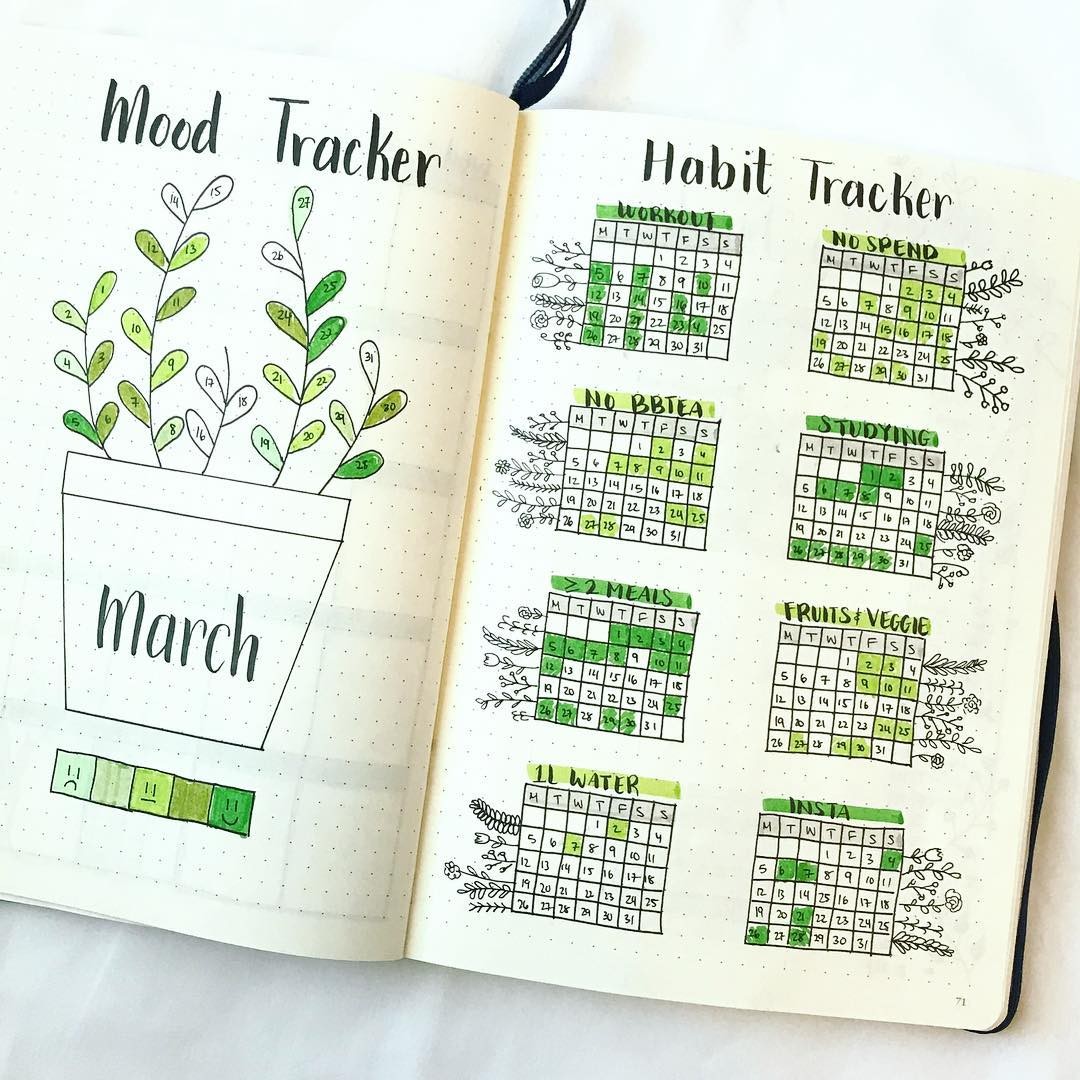
In a bullet journal, a mini habit tracker provides a convenient way for individuals to monitor their daily habits. Its compact design ensures it doesn’t dominate page real estate, while still offering ample space to mark off completed habits each day. The best part? This layout allows for coexistence with other trackers, such as a mood tracker, making the most of your journal’s available space.
Linear Habit Trackers
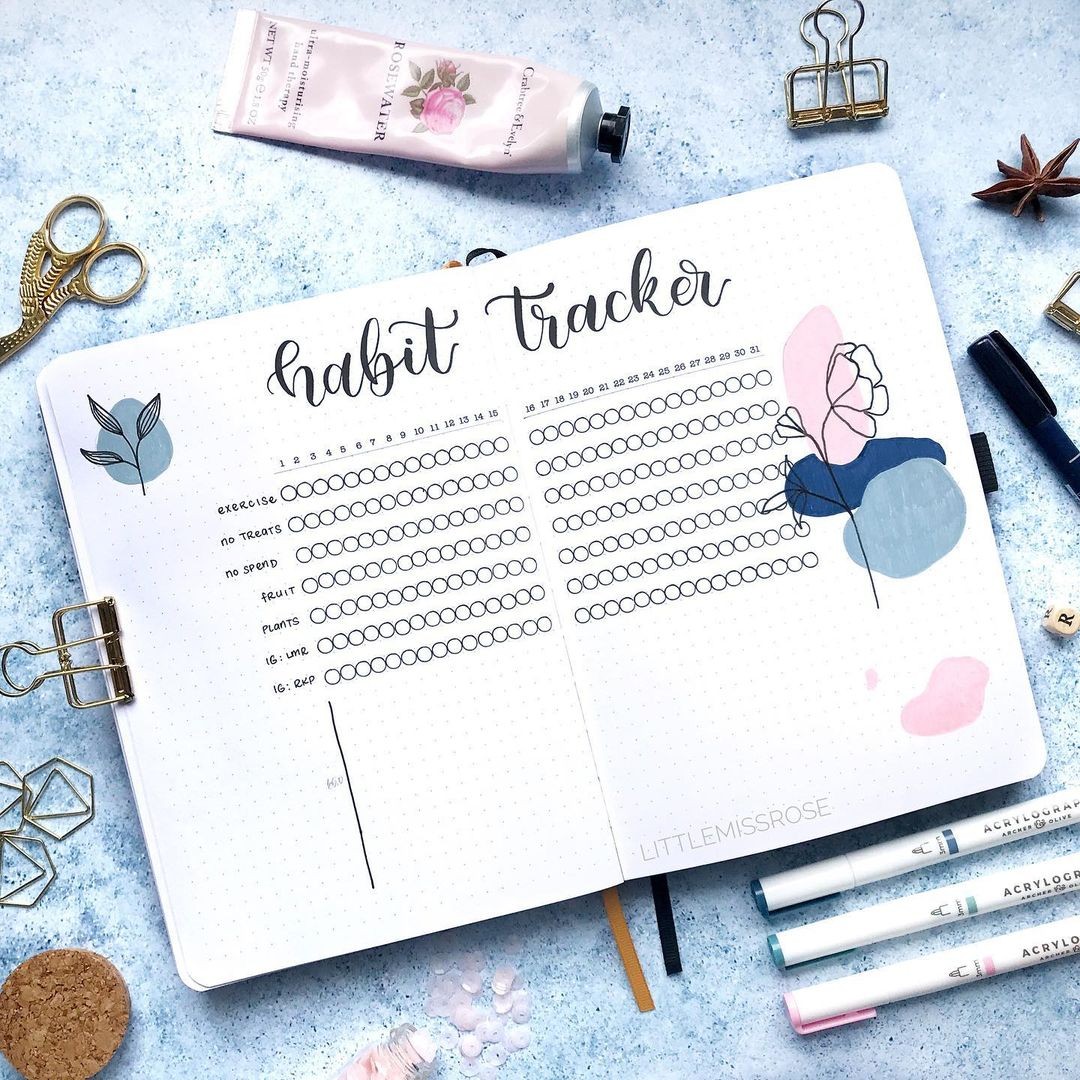
A popular approach to tracking habits is through the use of linear bullet journal habit trackers. This method involves designing a straightforward grid with habits listed along the vertical axis and dates running horizontally across the top. Each day, users simply mark their progress by indicating whether they have completed each habit or not.
Minimalist Habit Tracker
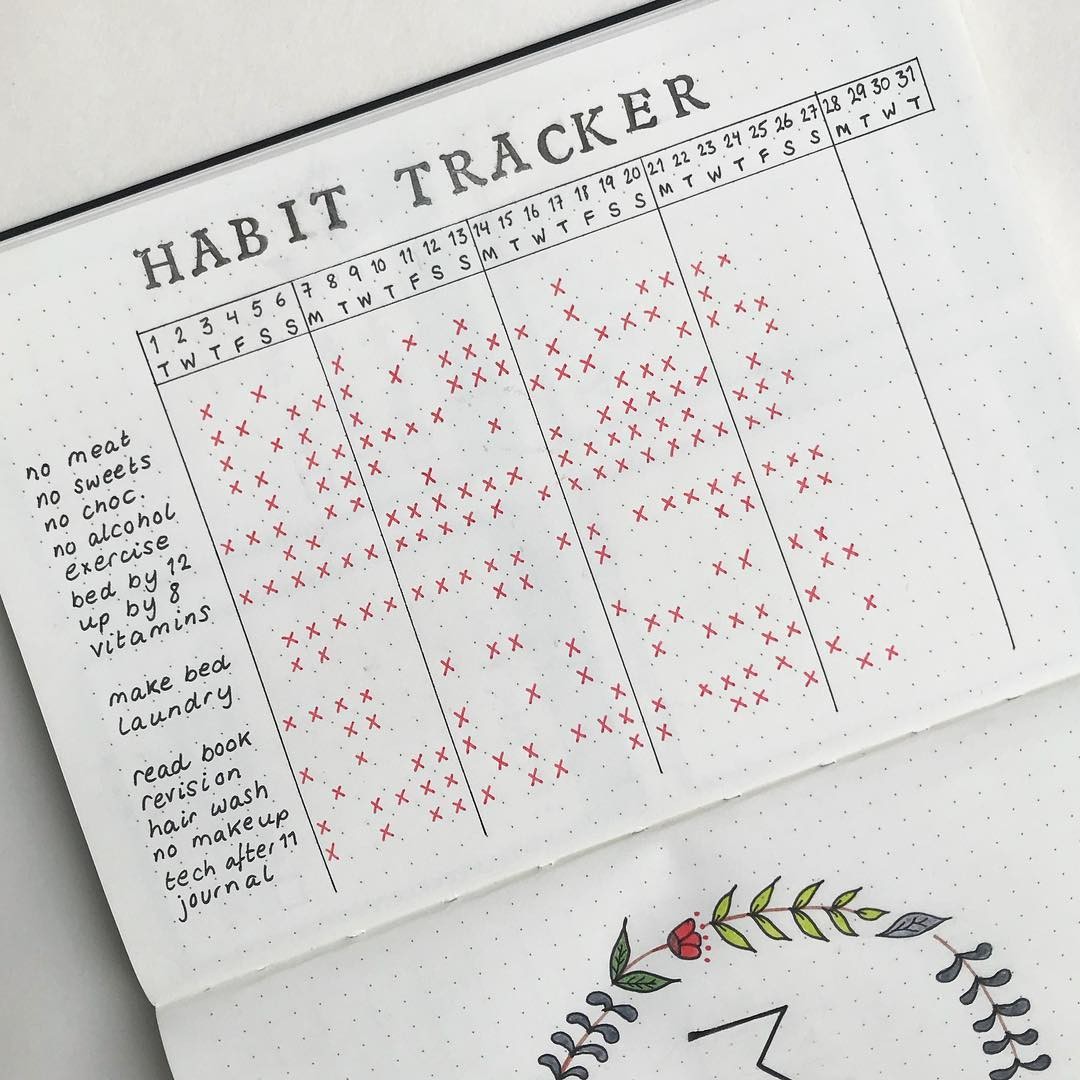
For those who prefer a low-fuss approach to habit tracking, lettering.by.lottie offers a straightforward method of recording daily progress. By simply listing desired habits in your bullet journal and marking a cross for each successful completion, individuals can easily monitor their consistency without investing a significant amount of time into the process.
Grid Habit Tracker

To create an effective habit tracker grid in your bullet journal, start by sketching a table with the number of rows and columns that best suit your needs. Each row should represent a specific habit or activity you want to track, while each column represents a day of the week or month, depending on your personal preference. As you regularly review your tracker, you’ll be able to spot trends and patterns in your habits, allowing you to make necessary adjustments to stay on track. Moreover, gazing at your progress can be a powerful motivator, as it helps you visualize the strides you’re taking towards achieving your goals.
Mini Calendar Habit Tracker
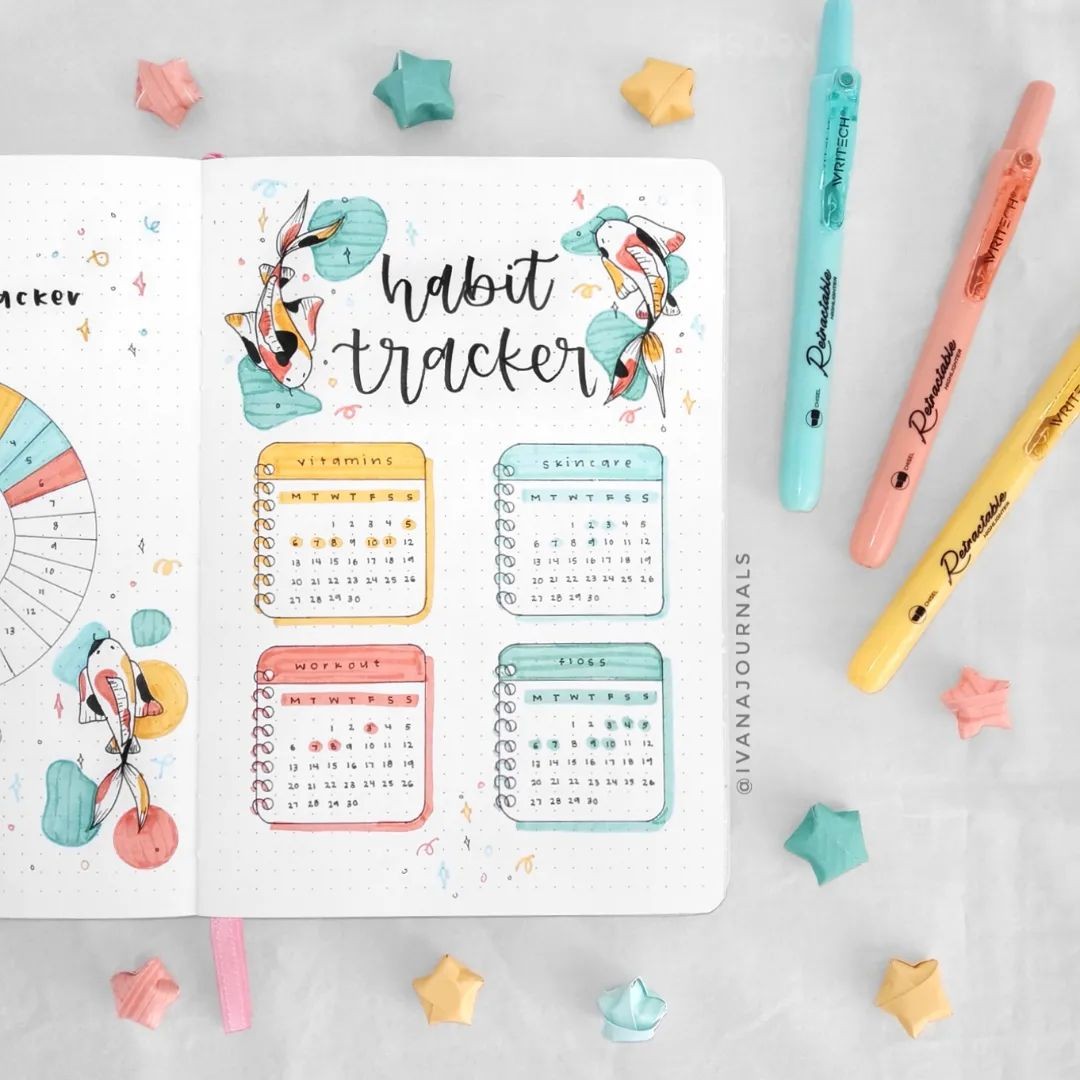
To maintain a consistent habit-tracking routine, consider utilizing a mini calendar habit tracker where you physically mark the corresponding symbol or icon on the calendar for each daily habit you successfully complete. As time passes, this visual approach will enable you to gain insights into your progress and uncover patterns or trends in your habits, allowing for data-driven decisions and informed adjustments.
Table Habit Tracker

In your monoblume journal, start by identifying the habits or activities you want to track along the rows of your table-style habit tracker. This might include exercise routines like ‘run’, ‘yoga’, or ‘strength training’, or daily habits such as ‘8 cups of water’ for hydration goals, or ‘drink water every hour’. Once you’ve created your personalized habit tracker, mark each day’s progress by filling in the squares or cells with a symbol indicating whether you completed the activity. For instance, if you tackled your morning run, fill in the corresponding square for that day to keep yourself accountable and motivated.
Illustrated Habit Tracker
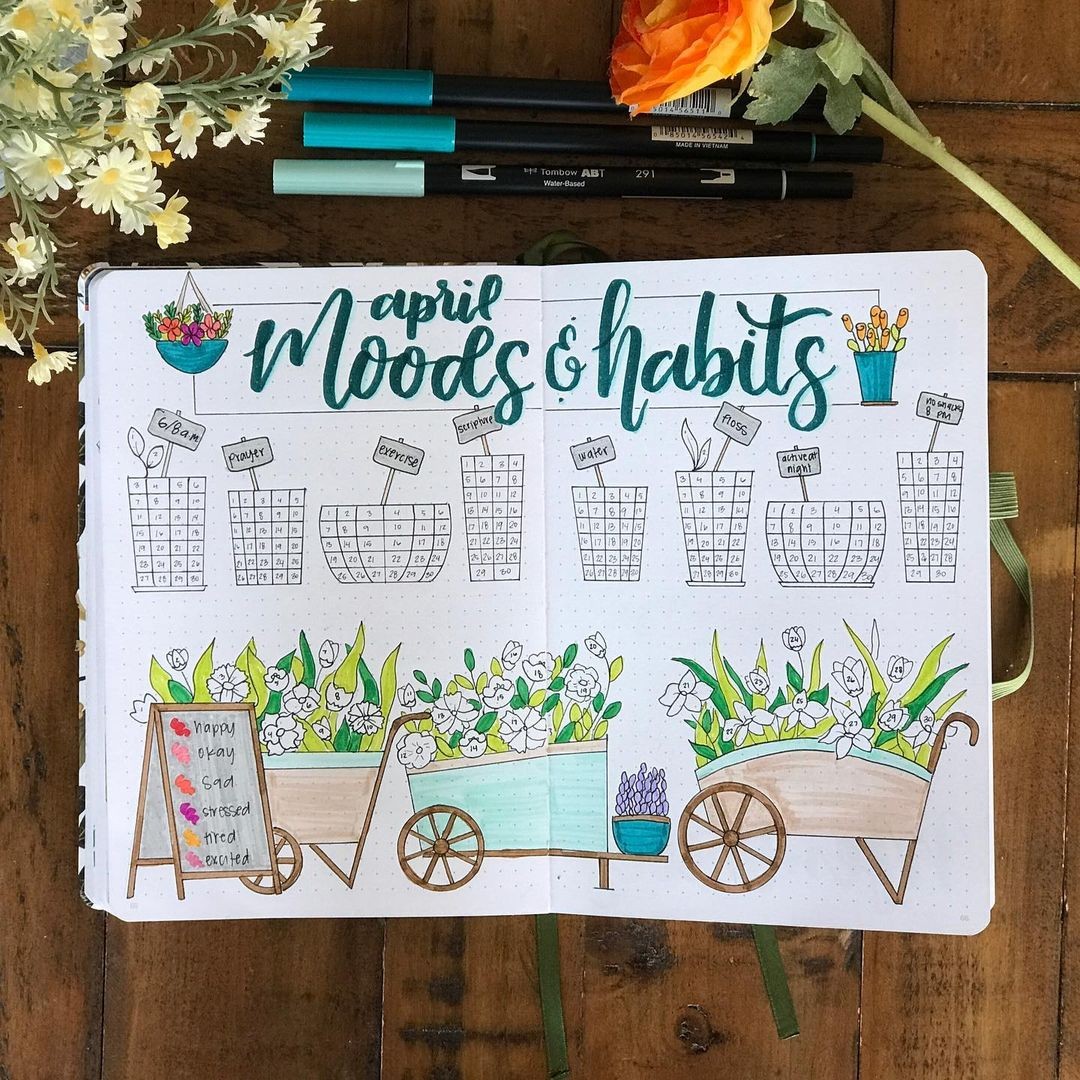
Transforming habit tracking into an art form is a fantastic approach to stay on top of your daily routines and habits. By using simple yet engaging illustrations or doodles, you’re not only monitoring your progress but also injecting fun and creativity into the process. This visual representation can be a powerful motivator, as it allows you to see your achievements unfold over time, fostering a sense of accomplishment and pride.
100 Days Habit Tracker
Ready to embark on a 100-day streak? The key to success lies not only in setting a goal, but also in having a reliable system to track your progress. This is where a thoughtful habit tracker comes into play. Imagine a visual representation of your daily accomplishments, with each mini triangle serving as a reminder of another day conquered. As you fill the triangles with color, you’ll be motivated to keep the streak going by witnessing the tangible results of your hard work.
Semi-Circular Habit Tracker
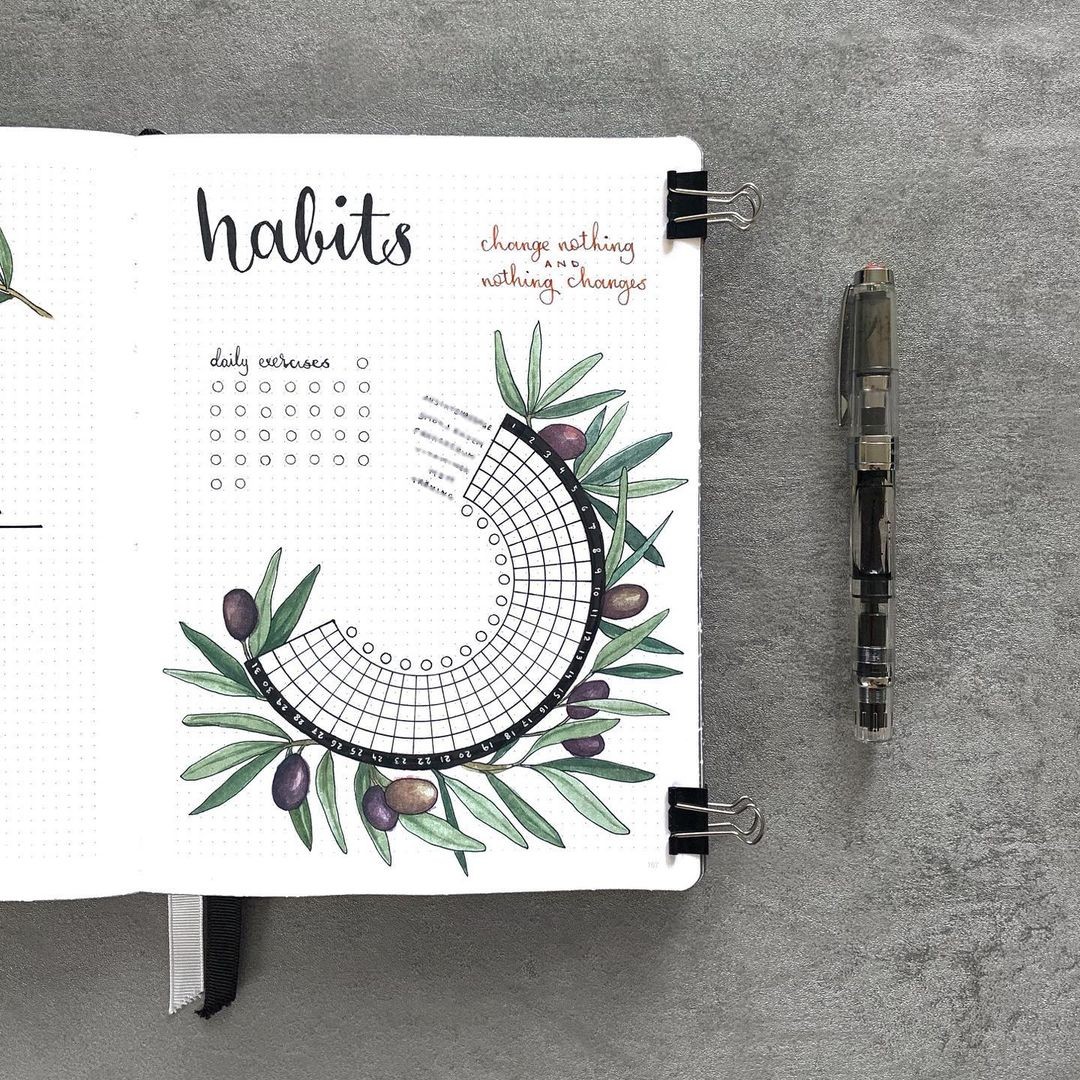
Transforming the art of habit tracking, a semi-circle bullet journal habit tracker offers an innovative approach to monitoring daily routines and progress towards objectives. By abandoning conventional grid or table formats, this circular chart provides a visually engaging platform for recording habits, injecting a dash of creativity and enjoyment into the process.
Hexagonal Habit Tracker
For those looking to add some creativity to their habit tracking routine, @thuys.bujo offers an innovative design that combines colorfulness with motivation. The hexagonal layout is particularly appealing for individuals who enjoy coloring and filling in spaces. By doing so, it can become a powerful tool in helping you stay committed to your daily habit goals.
Index Habit Tracker
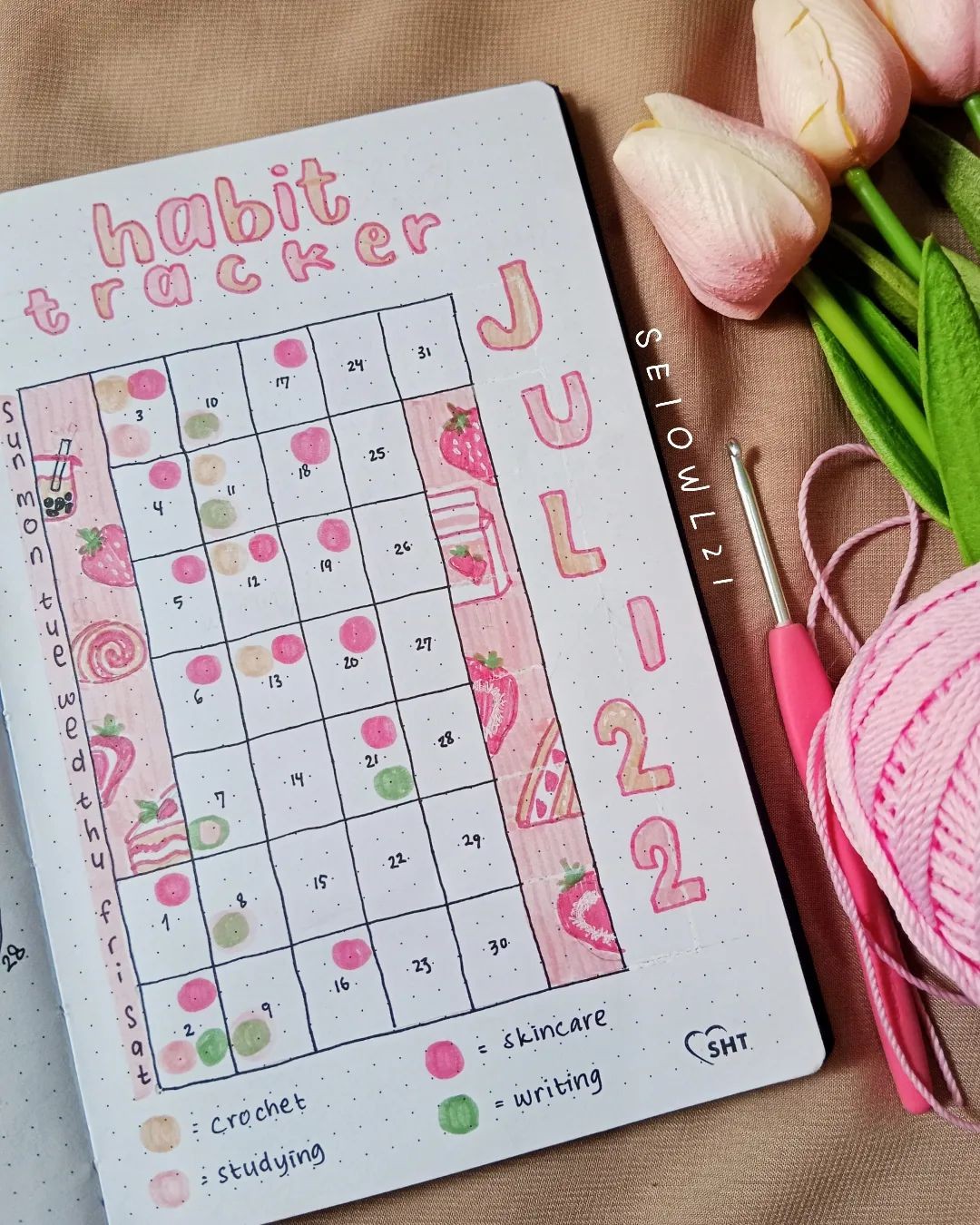
By incorporating color-coded indexes into your habit-tracking routine, you’ll be able to visually map out your progress with a unique and engaging approach. Start by creating a distinct color palette for each habit you want to track, then dedicate a monthly layout page to monitoring your daily accomplishments. Simply place a colored circle corresponding to the completed habits on each day of the month, allowing you to quickly identify patterns and areas of improvement.
Complete List Of Bullet Journal Habit Tracker Ideas
In a habit tracker, you can categorize your habits into various categories to stay organized and focused. One such category is Health and Fitness, where you can track activities like exercise routines, running or cycling distances, water intake, daily steps taken, sleep hours, meditation practices, food tracking, and more. Additionally, you can monitor personal development by recording time spent reading, learning a new skill, practicing a hobby, writing, journaling, or volunteering. For professional growth, you can track tasks like completing work-related tasks, learning new skills, networking, managing time effectively, and avoiding distractions. In the realm of finance, you can record daily expenses, create a budget, save money, pay off debt, and monitor investments. Lastly, for self-care and mental well-being, you can track skincare routines, medication adherence, therapy sessions, self-compassion practices, social media breaks, and gratitude logs. You can also include environmental habits like reducing waste, conserving energy, reducing water usage, eating vegetarian or vegan meals, and using eco-friendly products.